
Being a high-performing woman in a high-stress work environment means some days your energy feels stuck. You spend hours working on one written task and still can’t find the right words. You say yes to an idea, even when you have a better one, because speaking up feels like a risk. And by evening, work has taken every last bit of your energy, and nothing is left for you or the people around you.
Your days keep moving as usual, but something stalls beneath the surface. You feel present, yet at the same, not fully there. This disconnect signals a disruption to your life force aka blocked chakra.
What are Chakras and Where Are They Located in the Body?
We've got an energetic system running through our physical bodies which affects our mental and emotional states. Yoga traditions call the energy centers chakras, a Sanskrit word for “wheel” or “cycle”.
When your chakras stay in balance, energy flows freely, and you feel grounded, creative, confident, loved, heard, clear, and connected. Seven main chakras run along your spine, and each one connects to a different part of your life.
-
Rests at the base of the spine and anchors your sense of foundation and stability.
-
Sits in the lower belly and fuels creativity and passion.
-
Centers in the upper belly and drives your power and confidence.
-
Radiates from the center of the chest and opens you to love and compassion.
-
Lives in the throat and shapes how you express yourself and communicate.
-
Gathers between the eyebrows and guides intuition and insight.
-
Crowns the head and connects you to spirituality and enlightenment.
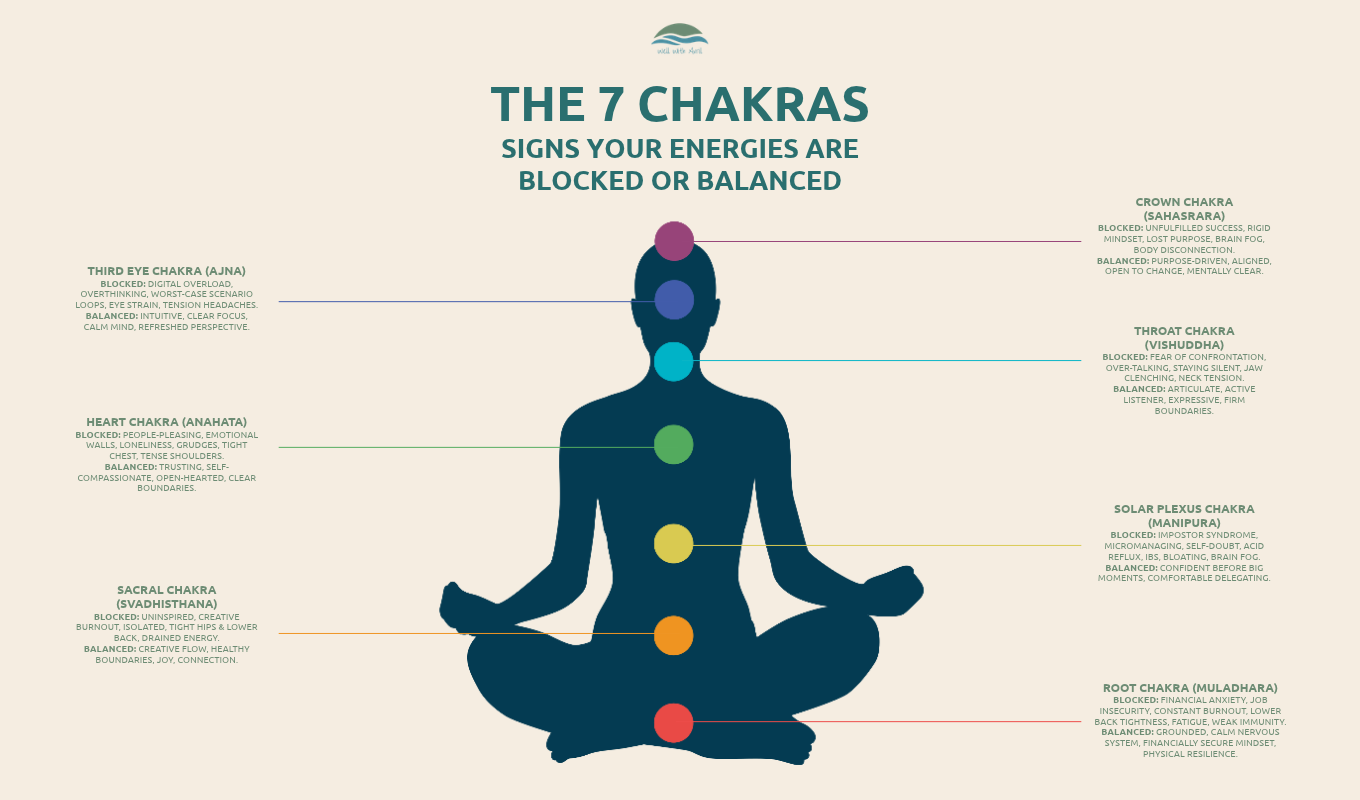
How to Tell When Each Chakra Is Blocked on High-Stress Workdays
Blocked chakras often go unnoticed and show up as one of the eight stress patterns and when left unaddressed, it compounds overtime and leads to burnout. Because everything is interconnected, an imbalance in one chakra affects another thus creating a ripple effect throughout the entire system.
Here’s how each blocked chakra signals on a high-stress workday:
-
At Work:
You carry underlying anxiety about job security or finances.
You feel unsafe when you slow down or take a break.
You live on the edge of burnout despite your achievements.
Physical Signals:
Because the root chakra is responsible for our sense of security, an imbalance impedes with our body's ability to protect itself.
A weakened immune system may show up as frequent illness, slow recovery, and chronic fatigue.
Your lower back tightens and you experience restlessness.
-
At Work:
You feel uninspired at work and your creative ideas dry up.
You stay busy by prioritizing work deliverables at the expense of personal growth and social connection.
You stay late to finish one more task and cancel personal plans.
Physical Signals:
An imbalance in the sacral chakra shuts off the creativity and joy that usually recharge you like hobbies or time with the people you love.
Your lower back and hips tighten.
Your energy runs low.
You feel physically drained after creative sessions.
-
At Work:
You keep rewriting a single report, making sure it’s perfect.
You feel nervous before big presentations.
You micromanage and struggle to delegate tasks.
Intense impostor syndrome makes you second-guess your authority.
Chronic self-doubt and low confidence leave you feeling stuck and unable to find solutions.
Physical Signals:
The solar plexus sits at your center of confidence, so self-doubt tends to land in your gut before big moments.
You constantly carry anxiety.
You experience mental fog.
This may also show up as abdominal issues like:
chronic bloating
acid reflux
irritable bowel syndrome (IBS)
ulcers
sluggish metabolism
liver issues
unexplained discomfort in your upper abdomen.
-
At Work:
You say "yes" to every request, even when you don’t have the time.
You keep your emotional walls up so high that you can't build genuine connections.
You keep replaying a mistake from a previous meeting, wondering how you could’ve handled it differently.
Emotional Signs:
You feel lonely even when surrounded by colleagues.
You struggle to trust your team.
You criticize yourself harshly after mistakes.
You hold onto grudges after conflicts.
You take control because you fear loss.
Physical Signals:
Your chest tightens.
Your shoulders tense.
Your breathing turns shallow under pressure.
-
At Work:
You hold back strategic ideas out of intimidation.
You stay silent when someone crosses your boundaries.
You struggle to give, receive, and process constructive feedback.
You fight an exhausting internal battle between instinct and hesitation.
Underactive Throat Chakra:
You frequently hide or mask your opinions because you fear confrontation or burdening others.
Overactive Throat Chakra:
You fear being overpowered, so you control conversations by rapid-talking, being loud and/or interrupting others.
Stagnant Throat Chakra:
You struggle to communicate clearly under pressure, afraid of saying the wrong thing.
Physical Signals:
You clench your jaw or grind your teeth at night.
You feel tongue-tied.
You carry tension in your neck.
You experience sore throat or hearing difficulties.
-
At Work:
You struggle to focus and spend hours trying to write a single report.
You rely strictly on data while ignoring your gut feelings.
You get stuck in worst-case scenario loops.
You jump from one task to another, starting a lot of tasks but not finishing one.
Physical Signals:
You get tension headaches and eye strain from screen time.
You experience mind fog and difficulty focusing by mid-day.
An overactive mind and digitally stimulated person can cause imbalance to the third eye. Our third eye gives us the ability to sense things before they happen. It gives us the ability to read a room. However, digital overstimulation causes mental fog and fragmented attention. It can also cause cognitive overload. Overdependence on our devices impedes our ability to know our own mind. It dulls our sense and ability to connect to our intuition.
Reconnecting with your intuition starts with noticing where stress shows up in your day. In our 1:1 coaching sessions, we help overworked professionals who spend hours at a computer pinpoint those stress areas and build the habits that rebalance their third eye chakra.
-
At Work:
You hit another career milestone, yet you feel empty and detached from your higher sense of purpose.
You cling to established work systems or familiar routines, keeping your doors closed to organizational change.
You feel like you’re simply going through the motions to survive another week.
You struggle to align your personal values with your corporate role, leading to a deep sense of existential burnout.
Physical Signals:
You experience brain fog.
You feel disconnected from your body.
You feel drained despite adequate rest.
How Blocked Chakras Become Stress Patterns That Spill Over Into Life
Blocked chakras show up as stress patterns, and high performance makes those patterns feel normal. For high performing women, success can drown out stress yet your body still carries it through the day.
The physical effects of stress from back pain to headaches, and even neck and shoulder tension are easy to detect. But people tend to overlook the underlying signs. When unaddressed, blocked chakras can bleed into other areas of life. Researchers Repetti and Wang (2017) call this a spillover, the way daily work stress reshapes life outside work.
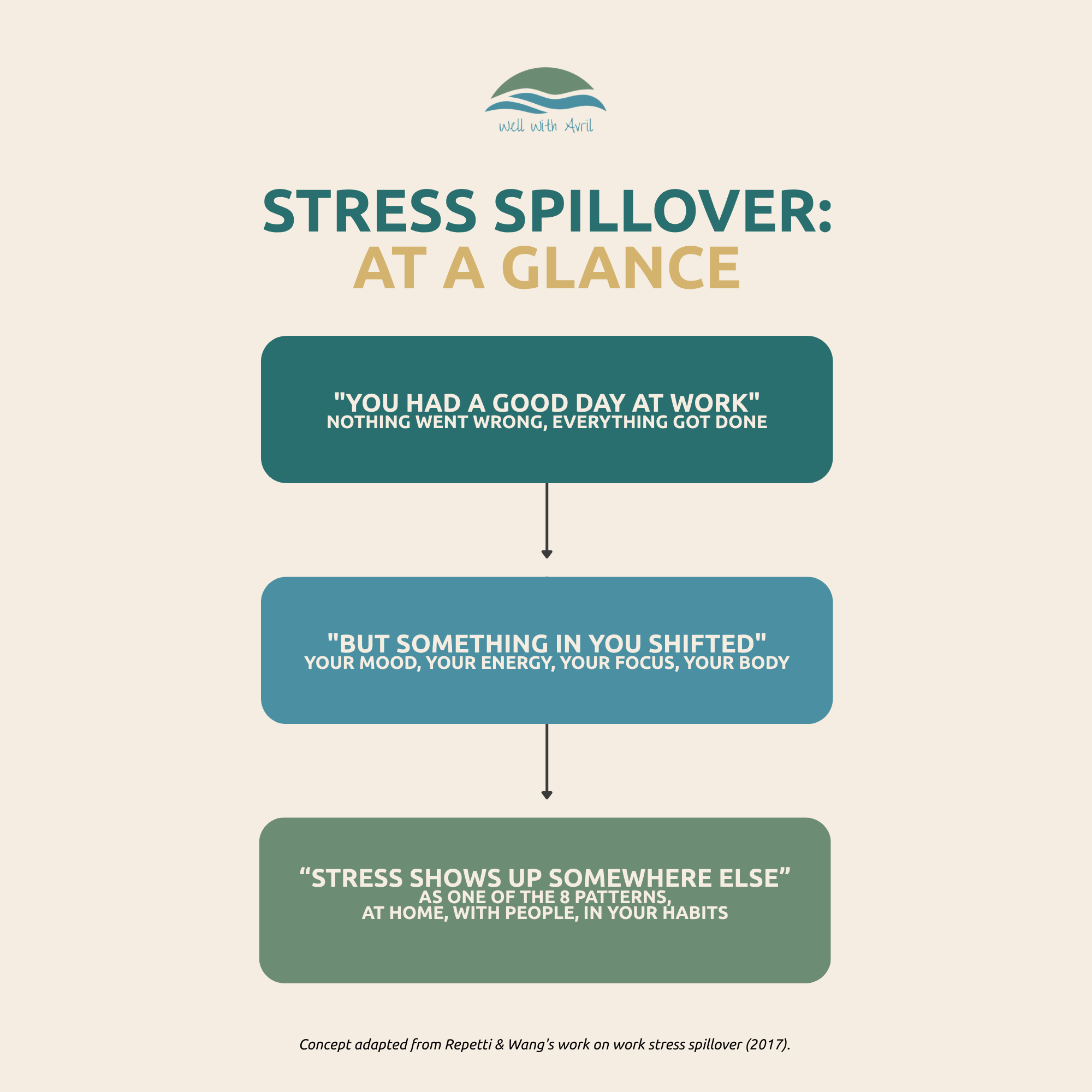
Stress shows up in your thoughts, your body, and your habits. Many high performers recognize themselves in one of these eight stress patterns: Cognitive Overload, Meaning & Identity Disconnection, Attention Fragmentation, Digital Overstimulation, Physical Nervous System Activation, Relational Pressure, Environmental & Sensory Overload, and Emotional Reactivity. When left alone, the spillover becomes your default, and you stop seeing it as stress at all. Once you notice it, the practices below give you somewhere to start.
Energy-Balancing Wellness Practices for High-Performing Women and Teams
For high-performing women and teams in fast-paced work environments, Well With Avril corporate wellness practices help balance energy flow. Yoga links certain poses to specific chakras, breathwork steadies the body, and soundbath meditation re-energizes your nervous system.
Mindful Yoga
Yoga uses movement to release physical tension and unblock chakras in the body. For high-performing women and teams, yoga sessions with Well With Avril offer a simple way to balance the blocked chakras without pushing your physical limits.
Cleveland Clinic lists yoga poses that may help you feel more emotionally balanced, and these five make a good starting point:
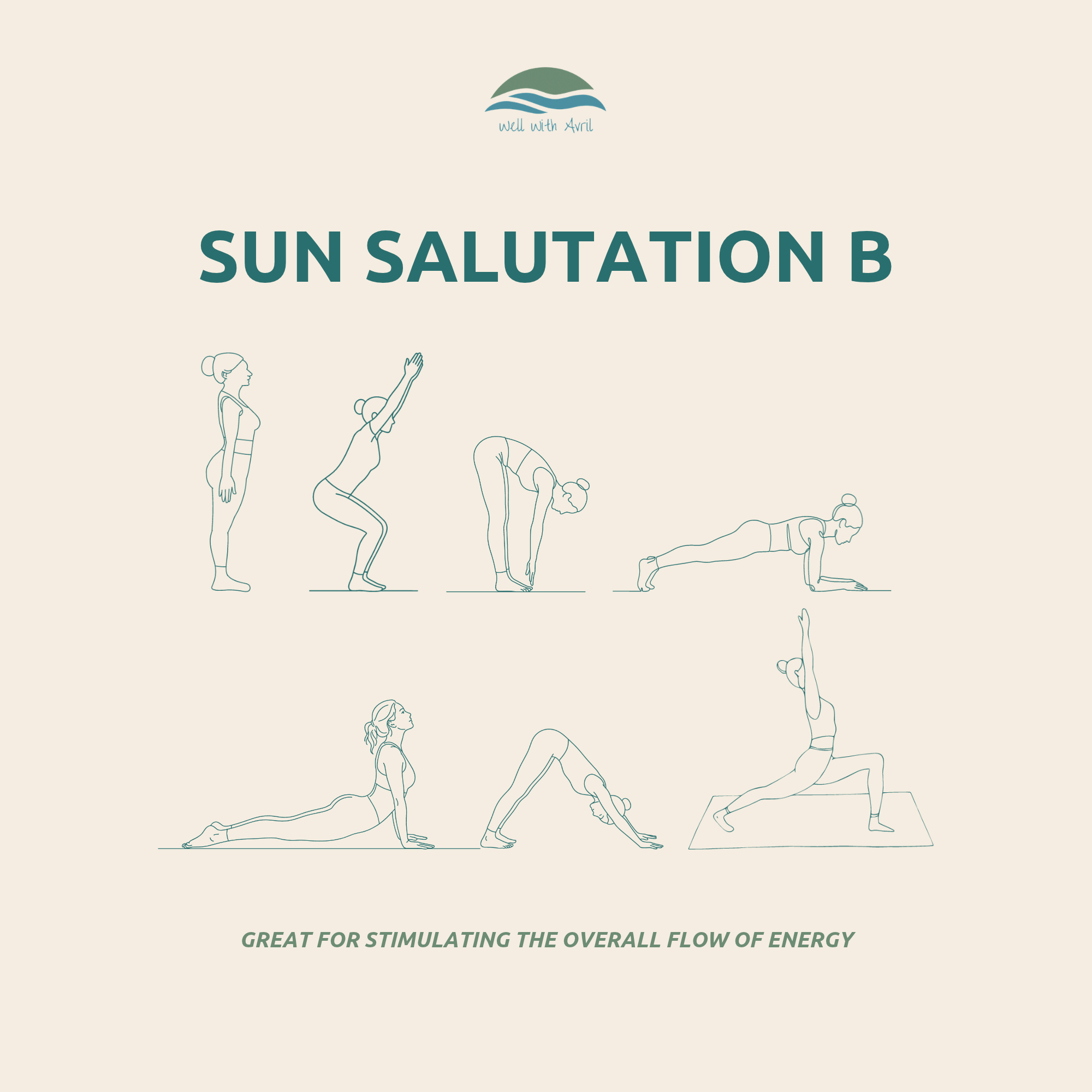
Sun Salutation B
Anchoring your lower body while expanding your spine clears away stored tension and mental fatigue to restore balance from root to crown.
Great for stimulating the overall flow of energy
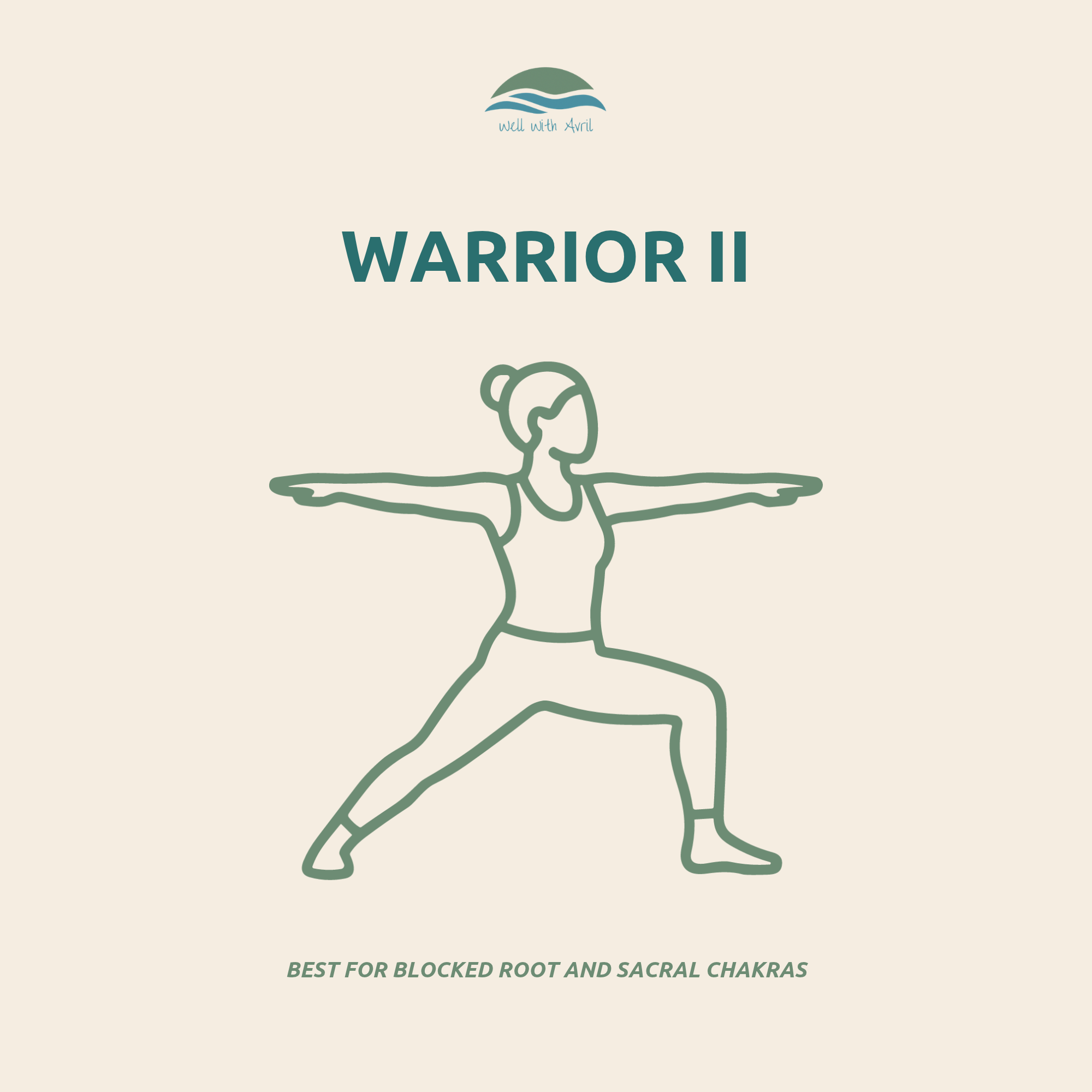
Warrior II
Pressing firmly through your feet into a wide stance grounds you back into the present and refuels your creative energy.
Best for blocked root and sacral chakras
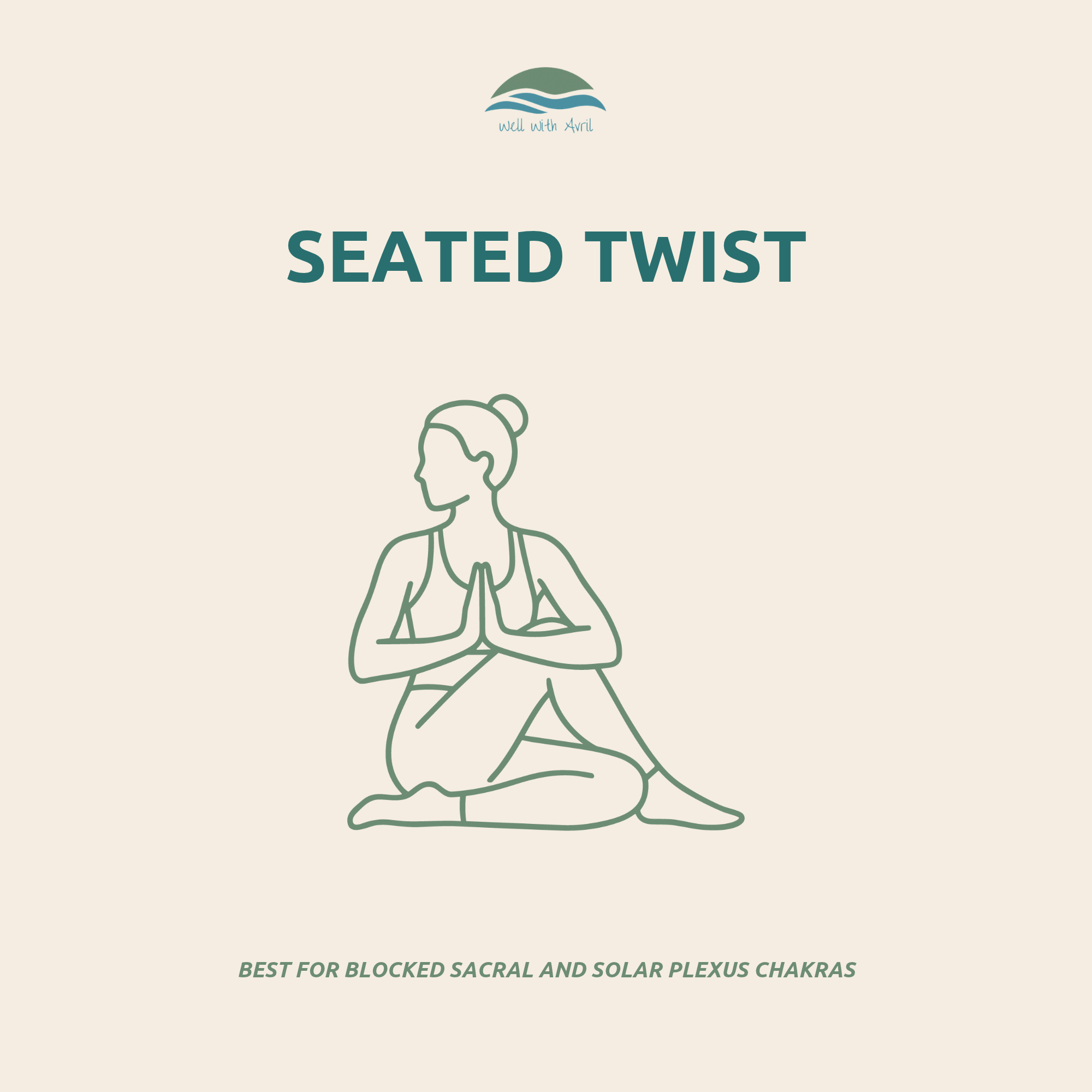
Seated Twist
Rotating the torso applies gentle compression to core organs, relieving desk stiffness and easing the physical core tension
Best for blocked sacral and solar plexus chakras
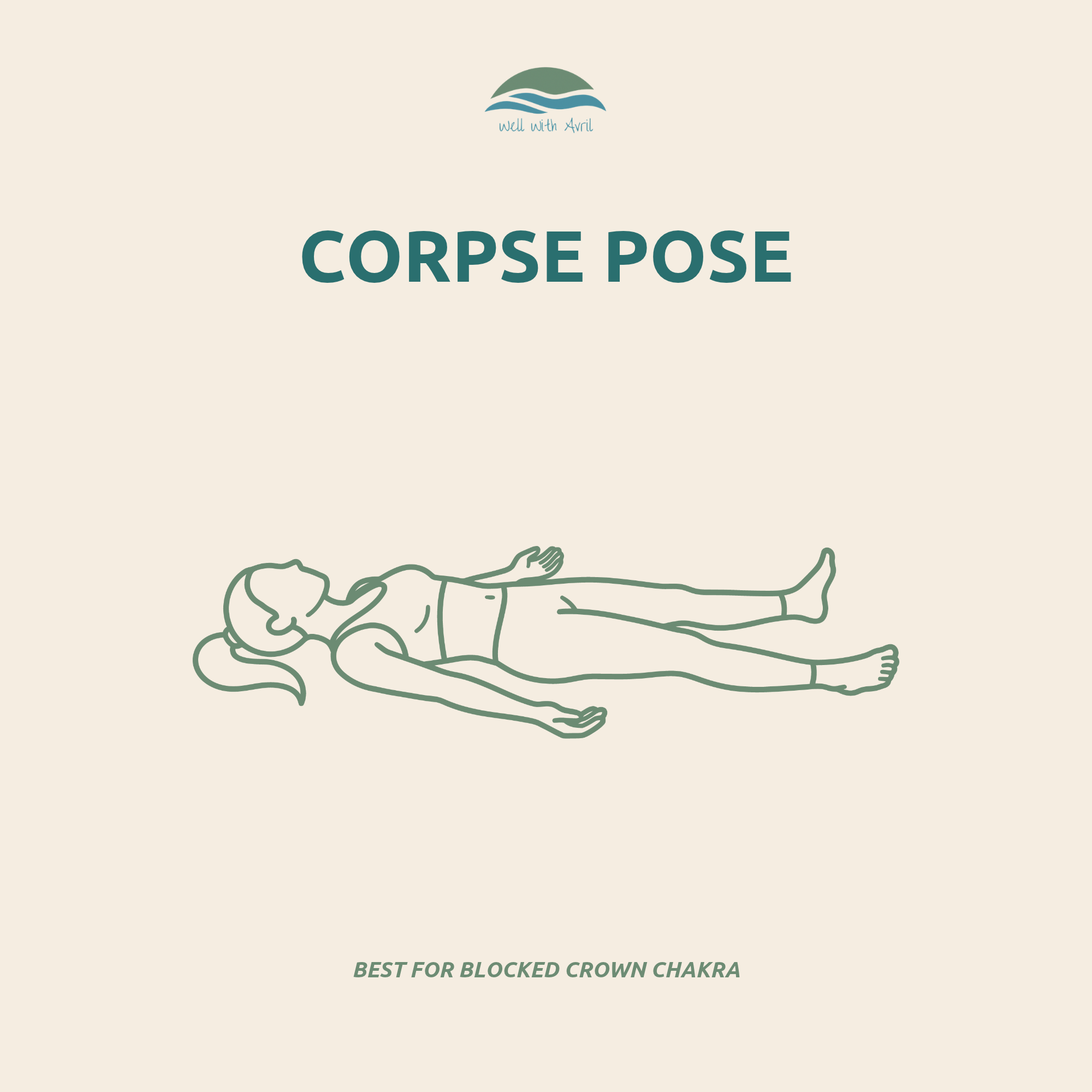
Corpse Pose
Lying flat and still lets your muscles release, slows your breathing, and quiets a racing mind.
Best for blocked crown chakra
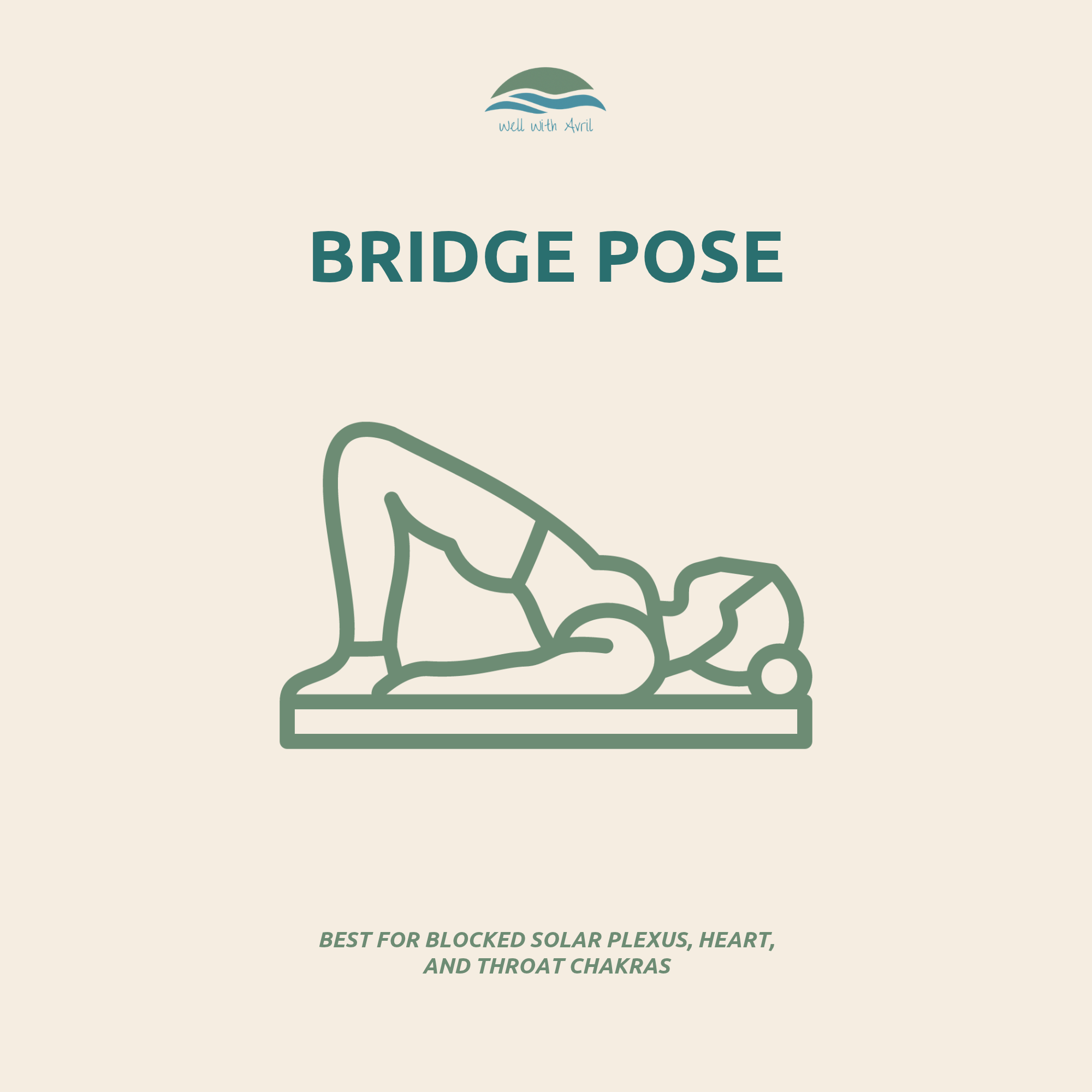
Bridge Pose
Lifting the hips and chest stretches tight throat and chest muscles, easing shallow breathing and freeing your voice.
Best for blocked solar plexus, heart, and throat chakras
We incorporate these poses into personalized 1:1 sessions and small team gatherings so you can move at a pace that feels right for you.
Grounding Breathwork
Breathing exercises offer high-performing women and teams a quick way to unblock your chakras and ground you in the present moment. By steadying your breath, you can restore energy flow and reconnect deeply with your body and mind in the middle of a busy workday.
Cleveland Clinic names alternate nostril breathing as a good practice
to balance the energy flow throughout your chakras.
Another breathing practice is the two-part breathing exercise
to step back into your confidence and create balance in your Solar Plexus Chakra (Manipura).
Restorative Soundbath Meditation
Vibrational frequencies help balance blocked chakras in the body. Restorative soundbaths invite deep rest for high-performing women and teams who spend most of their days in their heads and disconnected from their bodies.
The full-body experience makes the practice a natural way to end our private, corporate and group yoga sessions.
Beyond regular sessions, hosting soundbath meditation in a cozy space also allows the nervous system to relax even deeper. Well With Avril recently hosted a special soundbath session in a mattress store in partnership with McRoskey Mattress Co. in Potrero Hill, San Francisco.

Yoga & Stress Management Retreat
An imbalance in the chakras can reflect a deeper disconnect from our authentic selves. So much of modern life asks us to operate at a pace that isn't truly our own. We learn to adapt, keep up, and meet expectations, often at the expense of our own natural rhythms and inner needs. Over time, we can lose touch with ourselves.
Yoga, breathwork, and soundbaths offer ways to tend to our energy and navigate everyday stress. But sometimes, reconnecting requires more than a daily practice. It requires stepping away from the familiar rhythms of life and allowing ourselves the space to slow down, turn inward, and restore balance.
Daloy Retreat, our immersive yoga and stress management retreat in Siargao, Philippines is perfect for anyone seeking:
A de-conditioning experience
An experience of living and doing without urgency
A wellness week shaped by natural rhythms
Direct connection to a way of being that we’ve lost through our modern way of life
References:
Azman, T. (2026). Blocked chakras? 7 signs your energy is stuck (and how to fix it). Mindvalley Blog. https://www.mindvalley.com/blog/symptoms-of-blocked-chakras/.
Cleveland Clinic. (2025). The 7 Chakras: What They Mean and How To Use Them for Health and Wellness. https://health.clevelandclinic.org/chakras.
Mitchell, K. & Sammet Moring, N.F. (2025). The 7 Chakras for Healing and Energy.WebMD. https://www.webmd.com/balance/what-are-chakras.
Repetti, R. L., & Wang, S. (2017). Short-term and long-term effects of job stressors on the family. Current Opinion in Psychology, 13, 15–18 https://www.psych.ucla.edu/wp-content/uploads/Repetti-Wang-Current-Opinion-2017.pdf.
