

Breaking the Cycle of Overwork Through Sustainable Habits and Boundary Setting
Two weeks. That's how long Hayley Walker recently took a work hiatus without checking a single email.
When she came back, she didn't feel overwhelmed by everything she'd missed or pressured to catch up. She simply picked up where she left off.
Months ago, that would've felt impossible.
Back then, Hayley worked until 8 pm or even later. Vacations didn’t really feel like time off because she’d still check her emails. Just in case something came up. Today, she's just as committed to her work. The difference is that work no longer follows her everywhere she goes
Hayley Walker was referred to coaching by another client and first joined one of my yoga workshops. During the workshop, we explored how our Doshas, our unique personal energetics, influence the way we move on and off the mat. Hayley resonated with Kapha energy: steady, dependable, the kind of person who naturally takes on responsibility for others.
Looking back, it explained why saying yes came as naturally to her as breathing.
At the time, Hayley was already working with a therapist to process her experiences. She wanted coaching to complement that work by providing accountability, structure, and a future-focused space to turn insight into sustainable action. Coaching wasn't about telling Hayley what to do. It was about helping her build habits and systems that aligned with the life she wanted to create.
HOW HAYLEY’S COACHING JOURNEY BEGAN

Hayley Walker, Associate Director of Development for Real Options for City Kids
Our first coaching session centered on creating a vision. I asked Hayley “If we worked together for six months, and by the end you felt like the happiest, healthiest, most joyful version of yourself, what would that look like?”
Her answer became our North Star. Rather than focusing only on reducing stress, we defined what she wanted to move toward and used that vision to guide every coaching goal we set together.
Next, Hayley completed the Stress Pattern Self-Check. Together, we identified the stress drivers having the greatest impact on her wellbeing and translated them into practical coaching goals. Rather than trying to change everything at once, Hayley chose one or two small actions to practice between sessions. Each conversation built on the last as we reflected on what she learned, celebrated progress, and adjusted her approach moving forward.
IDENTIFYING HER STRESS PATTERNS
SETTING WORK BOUNDARIES TOGETHER
Hayley loved her work. Because she cared so passionately, work slowly spilled over to every part of her life. Her goal wasn't to care less about the mission. It was to stop confusing commitment with constant availability.
Most of our sessions centered on helping Hayley put boundaries into practice. Together, we identified the situations where she was most likely to overcommit and developed practical strategies she could use in those moments. Before accepting new commitments, she practiced pausing to consider her priorities, current workload, and available capacity.
Each week, Hayley experimented with one or two new approaches, reflected on what she learned, and adjusted her plan moving forward. Over time, these small experiments made saying no, or "not right now," feel more natural.
Delegation became another recurring theme in our coaching. Instead of trying to solve delegation in one session, we treated it as a skill she could build over time. As the Associate Director of Development for Real Options for City Kids, Hayley often felt it was faster to do the work herself than to explain the task, answer questions, and train someone else to complete it.
Hayley identified small, low-risk tasks to hand off first. As her team gained experience, she gradually created more space in her workload while developing greater trust in their abilities.
Throughout our work together, Hayley returned to her vision statement, Stress Pattern Self-Check results, values-based decision making, and a personalized decision flow chart. These tools gave her a practical framework to apply between sessions, helping intentional choices become lasting habits.
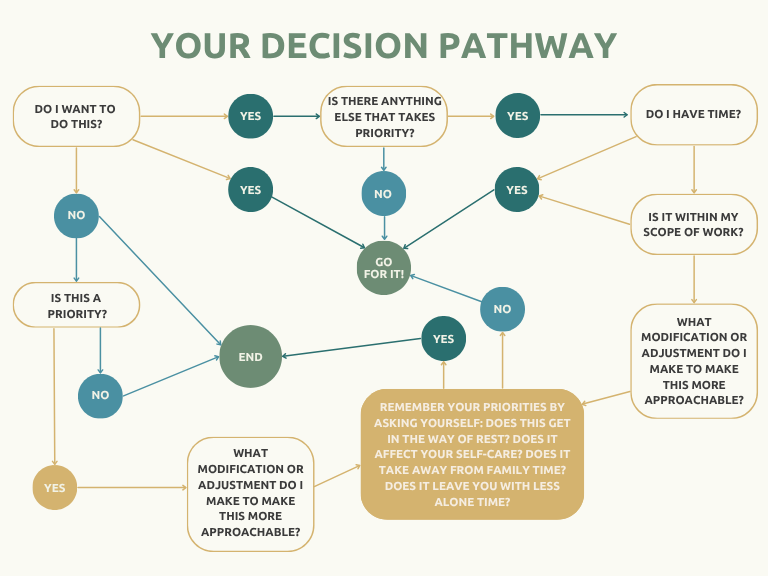
Before, saying yes was her default. The flow chart helped her pause long enough to ask a different question: ”Do I actually have the capacity for this?” Instead of responding automatically, Hayley learned to check in with her own bandwidth first thus creating space for her to pause and make intentional decisions rather than habitual ones.
WHERE THINGS STARTED TO SHIFT
Taking breaks wasn't easy for Hayley. At first, her goal was to take a break every day. It sounded straightforward, but it was too broad and it was hard to turn into something consistent. As the days progressed, Hayley noticed a clear pattern: "I was motivated on Monday, but as the week got busier, I was less likely to hold myself accountable."
So we set a more specific goal to take at least three breaks a week. This shift felt realistic and gave her the traction she needed to be consistent.
From there, we brainstormed and experimented with micro-breaks she could take on her workdays. She kept them specific, small, and sustainable: looking away from the screen for a few minutes, standing up, drinking water, or doing a quick stretch.
Hayley soon saw the difference: “Even a 2-3 minute break with some mindful breathing made my mind feel clearer.” These small pauses helped her return to tasks with a calmer nervous system and a fresh perspective. It also helped with her productivity and ensured she could clock out by 5PM even with the breaks.
As she built clearer boundaries and became more comfortable delegating, Hayley felt more at ease stepping away from work. She trusted that things could still move forward without her.
WHEN WORK STOPPED FOLLOWING HER
Then came a two-week leave from work.
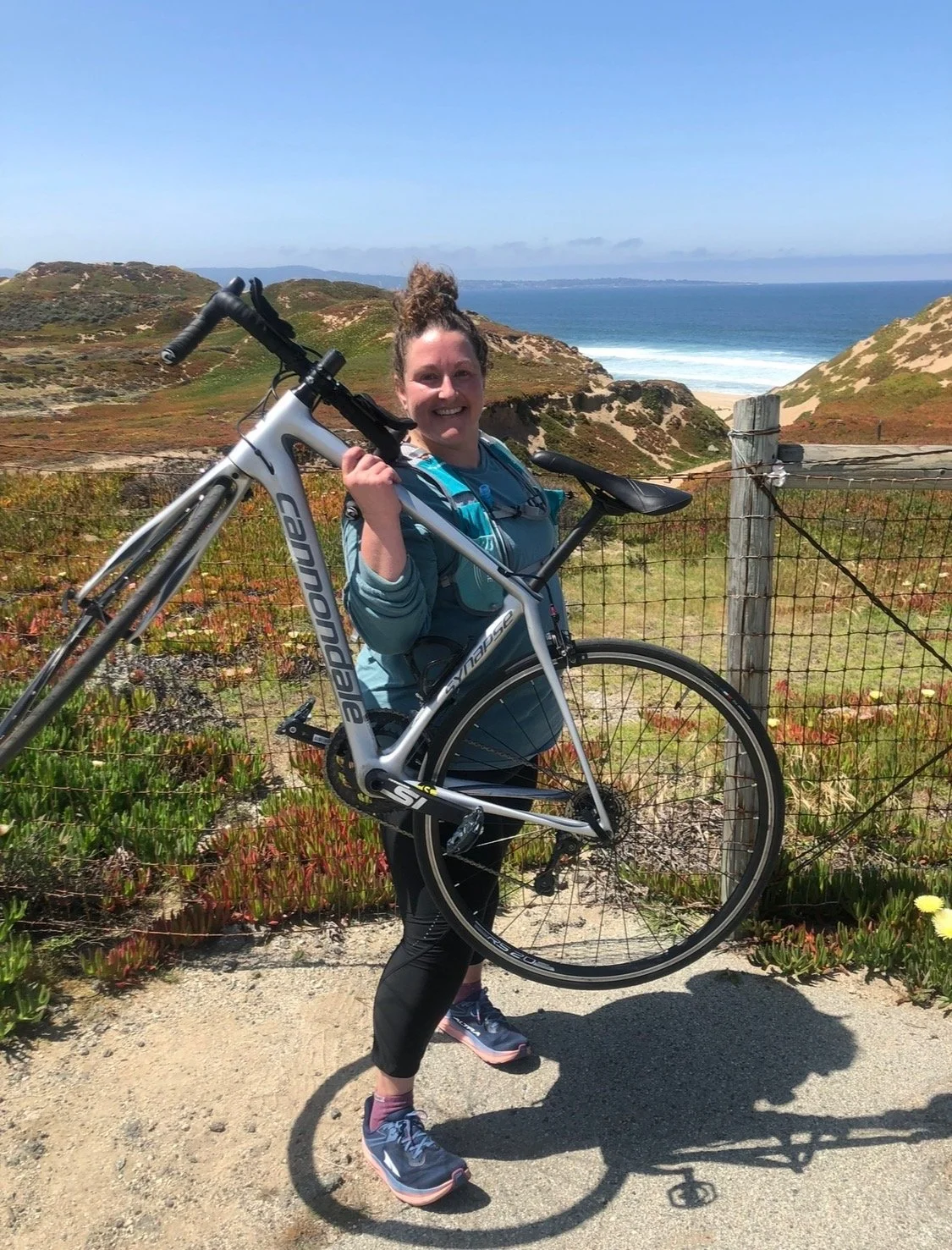
The old version of Hayley would have kept checking email through most of it. This time, she fully disconnected, rested, made art, and let herself heal without guilt. When she came back, she didn't feel the pull to overwork just to catch up.
Stepping away allowed her to see her role and her team in a new light: "I realized I don't always need to be the person putting out fires," Hayley shared. "I could trust my team to handle things while I was gone... It makes me more confident that I can delegate, and things will still get done with care and quality."
That same shift showed up in her everyday work too.
Before, saying "no" came with guilt. Now, she realizes that constantly saying yes often means saying no to her own rest, relationships, and wellbeing. She delegates more, accepts help more easily, and no longer sees asking for support as proof that she isn't doing enough. It's part of how she leads.
Those changes didn't happen because she became less committed to her role. Her relationship with work just changed. She learned that caring about her work didn't have to mean carrying it with her all the time.
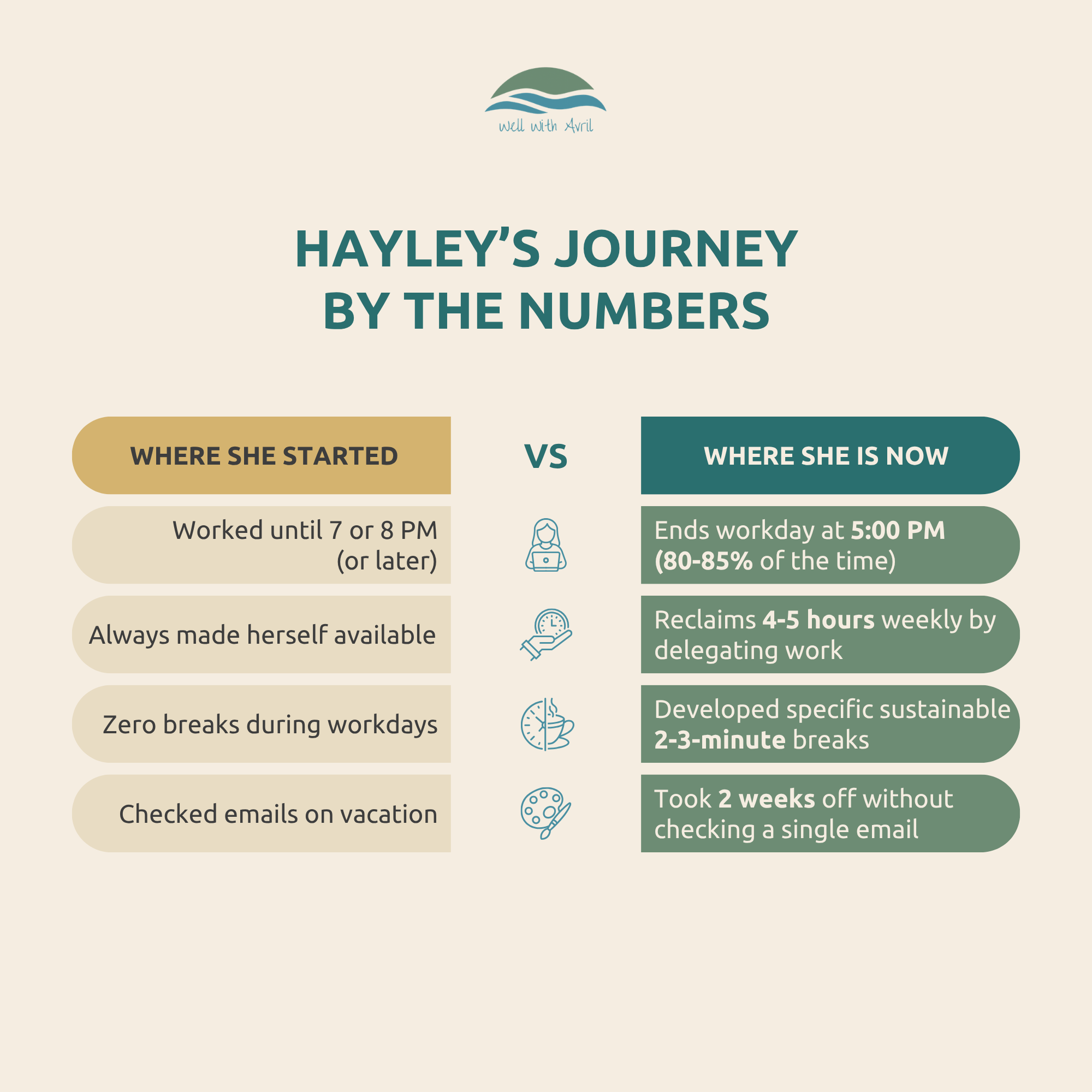
As a result, she’s saving four to five hours of work each week, ending her workday around 5 p.m. This happens about 80 to 85% of the time, compared to almost never before.

Real Shifts by the Numbers
80 to 85%
of workdays wrapped up by 5:00 PM

4 to 5 hours
reclaimed weekly by delegating work

2 weeks
off without checking a single email
REFLECTING ON THE IMPACT OF COACHING
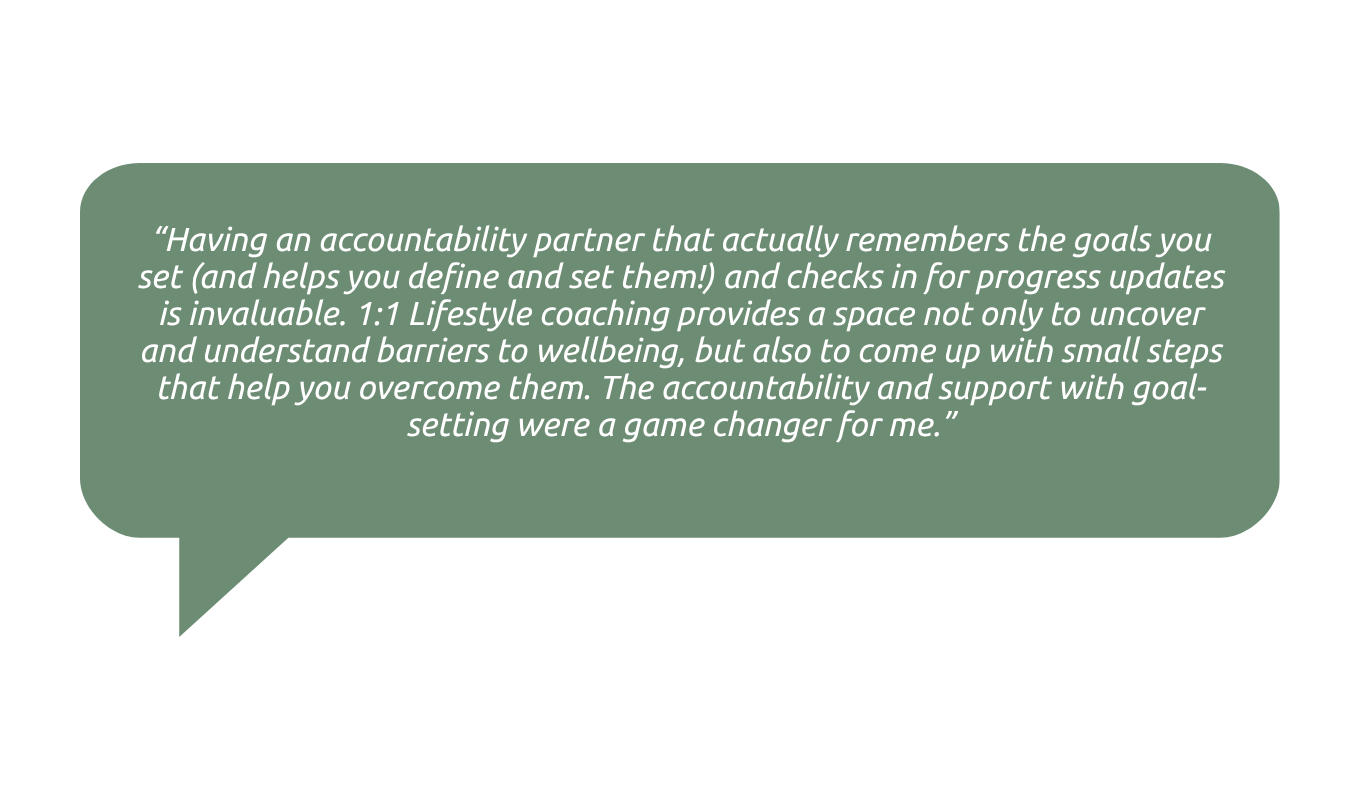
For anyone on the fence about taking this first step, Hayley shares what made all the difference:

REDEFINING SELF-WORTH BEYOND WORK
The transformation goes far deeper than a few reclaimed hours or tighter boundaries. For Hayley, this means building a relationship with work where she can stay committed while creating space for herself too.
Hayley's story shows what's possible when boundaries, delegation, and small, intentional shifts get consistent support over time.
Her progress didn't come from changing everything at once. It started with understanding her stress patterns, choosing what to focus on first, and experimenting with small shifts, reflecting along the way and building each one into something sustainable.
If you recognize yourself in Hayley's journey, you don't have to figure it out alone. Start with the Stress Pattern Self-Check. From there, we'll find where to begin and build on it together through 1:1 coaching.



Why Well With Avril
Finding balance shouldn't require stepping away from a career you love. Before becoming a full-time wellness coach, I spent years navigating corporate deadlines, constant context-switching, and the invisible stress that comes with high performance.
That experience inspires the practical tools I teach to help other professionals find calm, clarity, and balance without waiting for burnout or stepping away from their careers. Hayley’s transformation is just one example of what’s possible when you give yourself room to pause.