
The Mental Tab You Can’t Close: How Your Mind Keeps Working Long After You Stop
Before discovering yoga and stress management coaching, I worked in environmental sustainability. At the time, the work truly felt aligned with who I was. It was my passion. I cared deeply about protecting Mother Earth and advocating for more responsible management of our natural resources. With something as big as this, it became harder to distinguish where the cause ended, and I began.
The work took over my life.
Maybe you know this feeling too. When you learn to care so deeply about something, it becomes personal. So personal that it starts to define who you are. It becomes your identity and spills over to other areas of your life. You subconsciously carry the work home. Unfinished tasks infiltrate your weekends and the moments that should just be for yourself. Before you know it, your work-life boundaries have blurred.
How your weekend turns into just another workday
In fast-paced environments, tasks inevitably pile up. The norm is for everyone to be constantly on the go.
Picture this. You’re working on a project and your to-do list seems to grow longer every day. You gave the week everything you had. Yet, it still finds a way to come home with you. It’s Saturday morning. You’re sipping your warm tea or maybe coffee. You take a deep breath and feel immediately relaxed. You breathe in the fresh morning air, hear the birds singing, and feel the sun warm on your skin. You savor each sip without hurry.
Then, suddenly, you remember that pending task. The one you left unfinished yesterday because you already reached your limit for the day. Now, you’re thinking about work. Thinking ahead of what needs to get done. Your shoulders start to tense. Now, you feel behind and stressed.
You may not be sitting at your desk, but it feels like you have to be. Your weekend starts to feel like another workday.
How hidden stress quietly leads to burnout
Stress doesn’t always show up as a breakdown. Sometimes, it’s in your thoughts, your habits, and your relationships. It hides in plain sight. In this case, it looks like constantly thinking about work when you're supposed to be resting, replaying unfinished tasks in your mind, or feeling unable to fully switch off. This is hidden stress, also known as micro-stress.
Even when your body steps away from work, your mind stays on the job. When a task remains open in the background, it quietly pulls your attention back to it. When enough of these mental tabs stay open for long enough, stress stops feeling temporary and starts feeling constant.
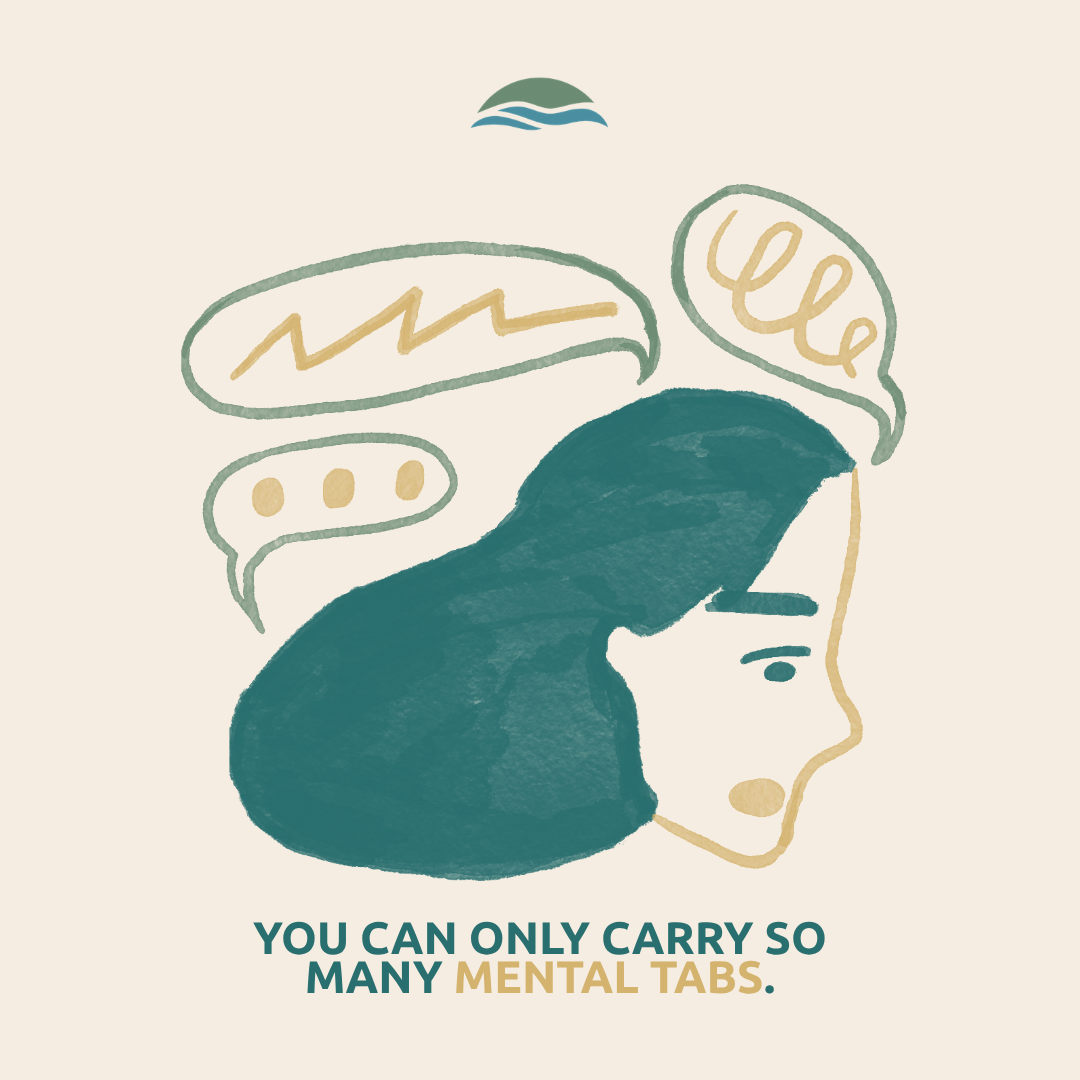
Carrying too many mental tabs can eventually lead to burnout.
Rest starts to feel like something you have to earn. Like you haven't done enough to deserve a full stop. So even when you take a break, you're not fully there for it. Your responsibilities keep pulling you back.
What you're experiencing has a name. And understanding it might be the first step toward getting your rest back.
How your brain holds onto tasks that aren't done yet
The mind naturally holds onto unfinished tasks until they are completed. Your brain isn’t trying to ruin your weekend. It’s trying to protect you from forgetting. This is a psychological phenomenon called The Zeigarnik Effect.
A Harvard Business Review article explores this idea through the experience of watching a simple Korean drama during the pandemic. The writer, Sawhney (2020), finished the 16-episode series in four days because she always needed to know what happened next. She soon noticed the same pattern showing up in her work. She wrote, “If I have an unread email, I find myself constantly wondering what it says. If I have an article that still needs editing, I can’t relax until I have a plan of execution.”
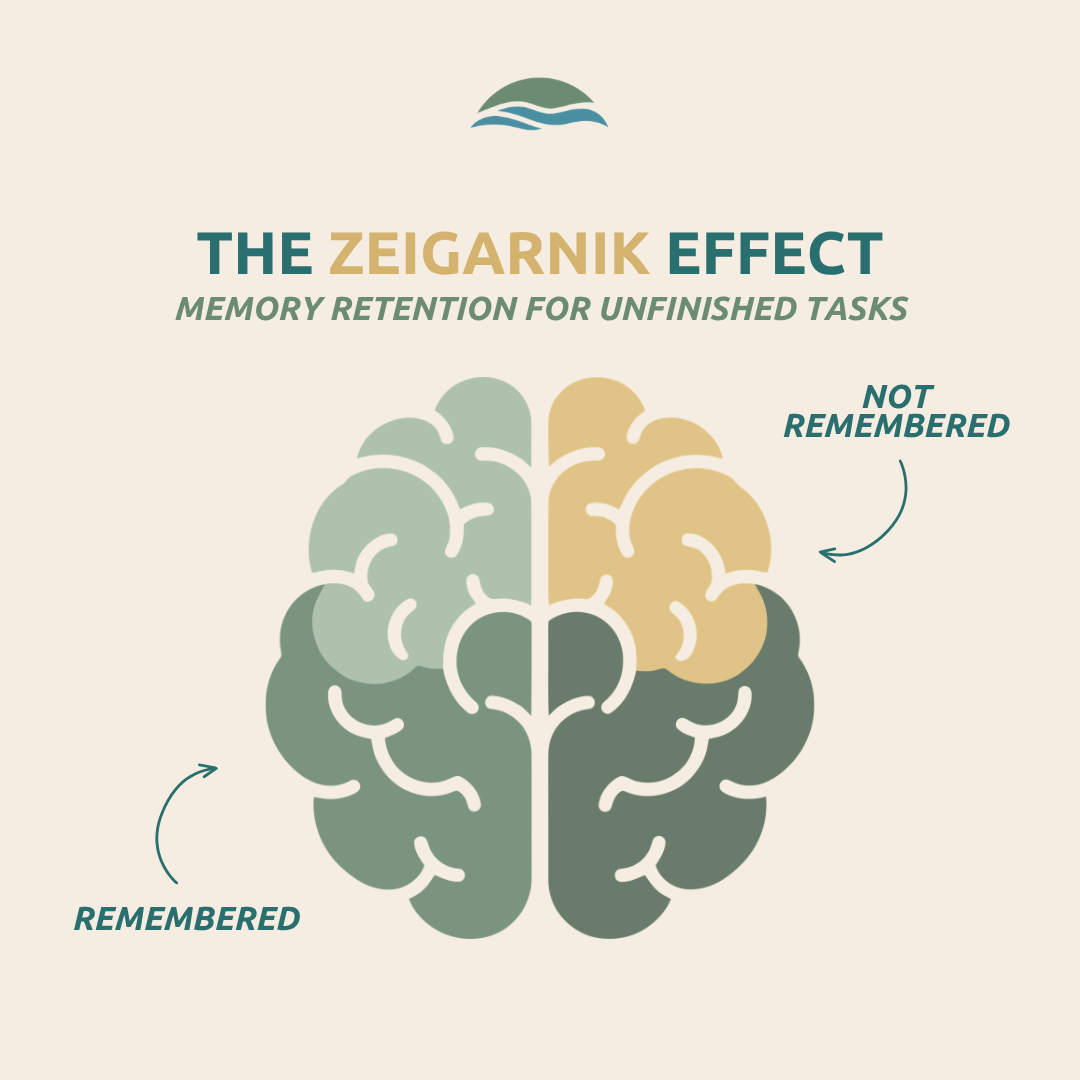
To understand what happens in the brain when tasks remain unfinished, Sawhney turned to an expert. Psychologist Dr. Roma Kumar describes it this way: the brain continuously rehearses a task to keep it active, creating the underlying tension you can't shake. Finish the task, and the mind moves on. Leave it open, and it keeps pulling you back (as cited in Vasundhara Sawhney, Harvard Business Review).
You can't help but constantly think about unfinished tasks. Your brain simply can't let go until the task is done. That's why TV shows use cliffhangers, and why your to-do list keeps looping in your mind on a Saturday morning.
Addressing productivity culture: How you can rest without guilt
Most of us were never taught how to transition out of work mode. We go from working at full speed to stopping abruptly. As a result, we often carry work responsibilities into our downtime.
Many of us also hold on to the belief that rest must be earned. We measure what we accomplish before we allow ourselves to pause. When there is still more to do, rest can start to feel uncomfortable.
So how can you get your rest back?
You may not need to do more. You may simply need a way to signal your mind that work is done for now. Simple questions that you can sit with to create a shift that gives you a little more peace when you're supposed to be resting. Start with these:
When your thoughts keep returning to work, try writing them down. Then notice, does naming it change how heavy it feels?
When the brain tricks you into feeling behind by looping unfinished tasks, Redirect: what's one thing you actually finished today?
Instead of resisting the mental loop, embrace the reminders. How can creating an anti-to-do list help signal your brain that the task(s) are accounted for and that you're giving yourself permission to step away from them until you're back at work?
How understanding your stress becomes the first step to managing it
The mental tab you can't close is just part of a much bigger picture. Bluma Zeigarnik helped us make sense of what we've been noticing all along. Because when something has a name, it becomes something you can actually work with.
So start there. Name what’s happening.
When the mind keeps returning to unfinished tasks, it may not always be about the task itself. It may be a sign of a larger stress pattern. Over time, the nervous system learns to stay alert and gets stuck on a cycle of looking for what’s left to do. What begins as a mental tab can eventually turn into a habit of staying mentally “on” even when the workday is over.
If you’re noticing that work doesn’t really stay at work, you’re not alone. A lot of people experience something similar, especially in environments where being constantly productive or on is expected or even praised. When this becomes a regular background pattern, it can quietly shape how you think, feel, and respond throughout the day.
Part of the challenge is that many of us find it hard to build a bridge between working and living. I spent years losing that bridge. Naming what's happening is where it starts. It helps us stop treating the gap between work and rest like it doesn't exist.
Cognitive overload is a sign that your system needs more support and intentional regulation. This is exactly the kind of work we explore in lifestyle and stress management coaching. Together, we slow things down, understand what’s actually driving the rumination, and build small, sustainable shifts that help you feel more clear, present, and able to truly switch off.
If you’re craving that kind of mental space again, this could be a supportive next step.
Closing Thoughts: You Don't Have to Wait Until Burnout Breaks You
Don't be like me. I waited too long to recognize, accept, and address the pattern until my body refused it. At the time, the only step left was to drop and quit everything. There was no other choice. You don't need to snowball to that moment.
There is a way to love what you do, be great at it, and not have it impede on your personal time. It starts with learning to transition, not abruptly, but intentionally. And if a 1:1 conversation about this feels intimidating right now, that's okay. Start with naming the stress pattern. Start with this free Stress Pattern Self-Check to see what else is contributing to your mental rumination. Remember, awareness now is prevention later.
Sawhney, V. (2020). Why your brain dwells on unfinished tasks. Harvard Business Review. Retrieved from https://hbr.org/2020/10/why-your-brain-dwells-on-unfinished-tasks
