

Alleviating Cognitive Overload and Digital Stimulation Through Stress Management and Lifestyle Coaching
Working from home often meant work bled into everything else for Claire Armstrong who has spent eight years in startup operations.
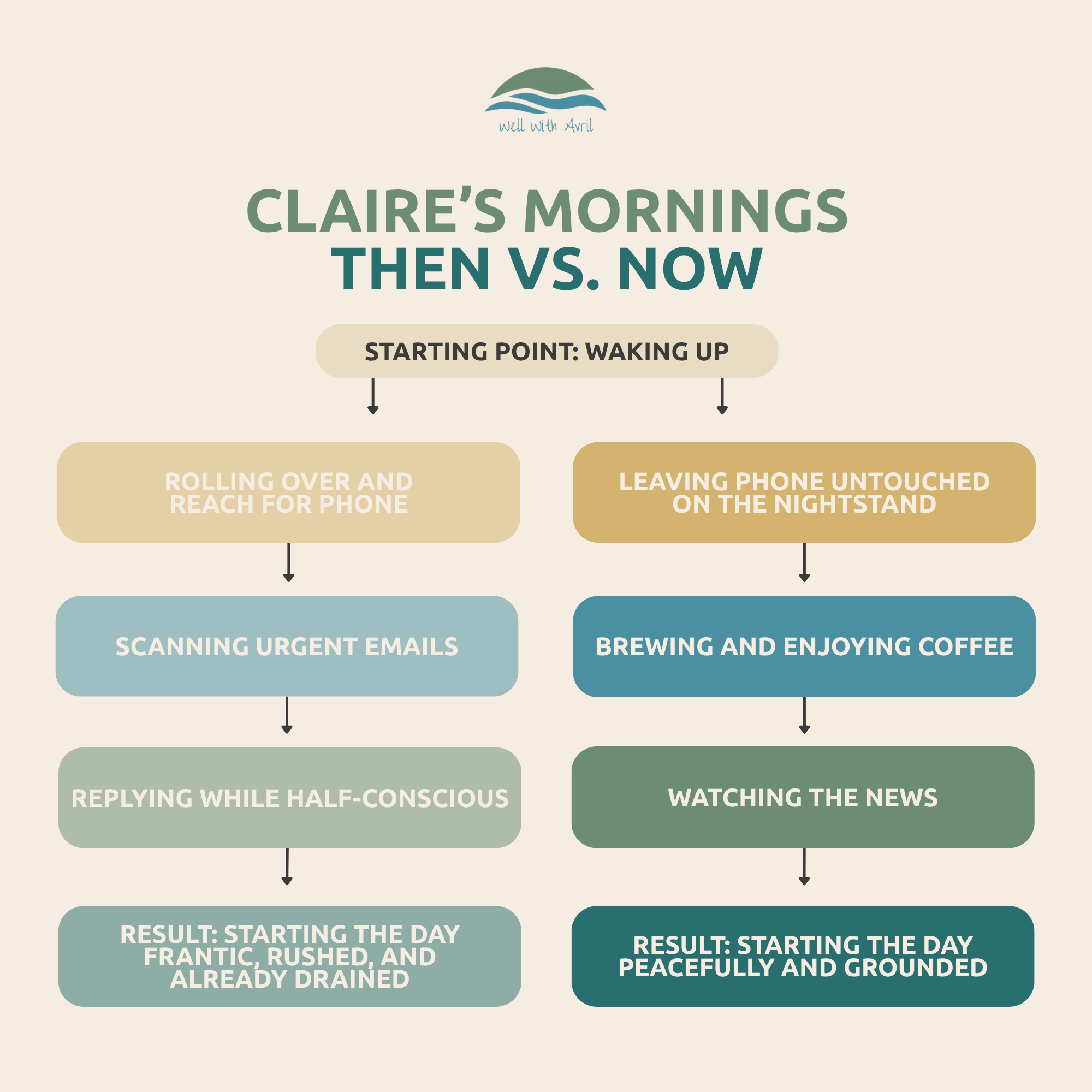
She would wake up in the morning, roll over, and immediately reach for her phone to start answering work emails before she was even fully conscious. Nights flowed similarly, with calls regularly scheduled after business hours, and crises from her team across the world requiring her attention. Claire was always on.
Her work laptop was her home laptop, and even her entertainment system. There was virtually no separation between her personal and work life.

While everyone else looked forward to enjoying their evening, Claire found herself too exhausted and discouraged for self-care. It was in the middle of all that when she finally handed in her notice earlier this year. She knew her routine needed to change. She wasn't sure what that looked like yet, but she was ready to explore her options.
Although Claire considered coaching, she felt like it would only add another list of cumbersome tasks to her already overflowing plate. It wasn't until after attending a retreat hosted by Well With Avril in the fall of 2025 that her perspective changed.
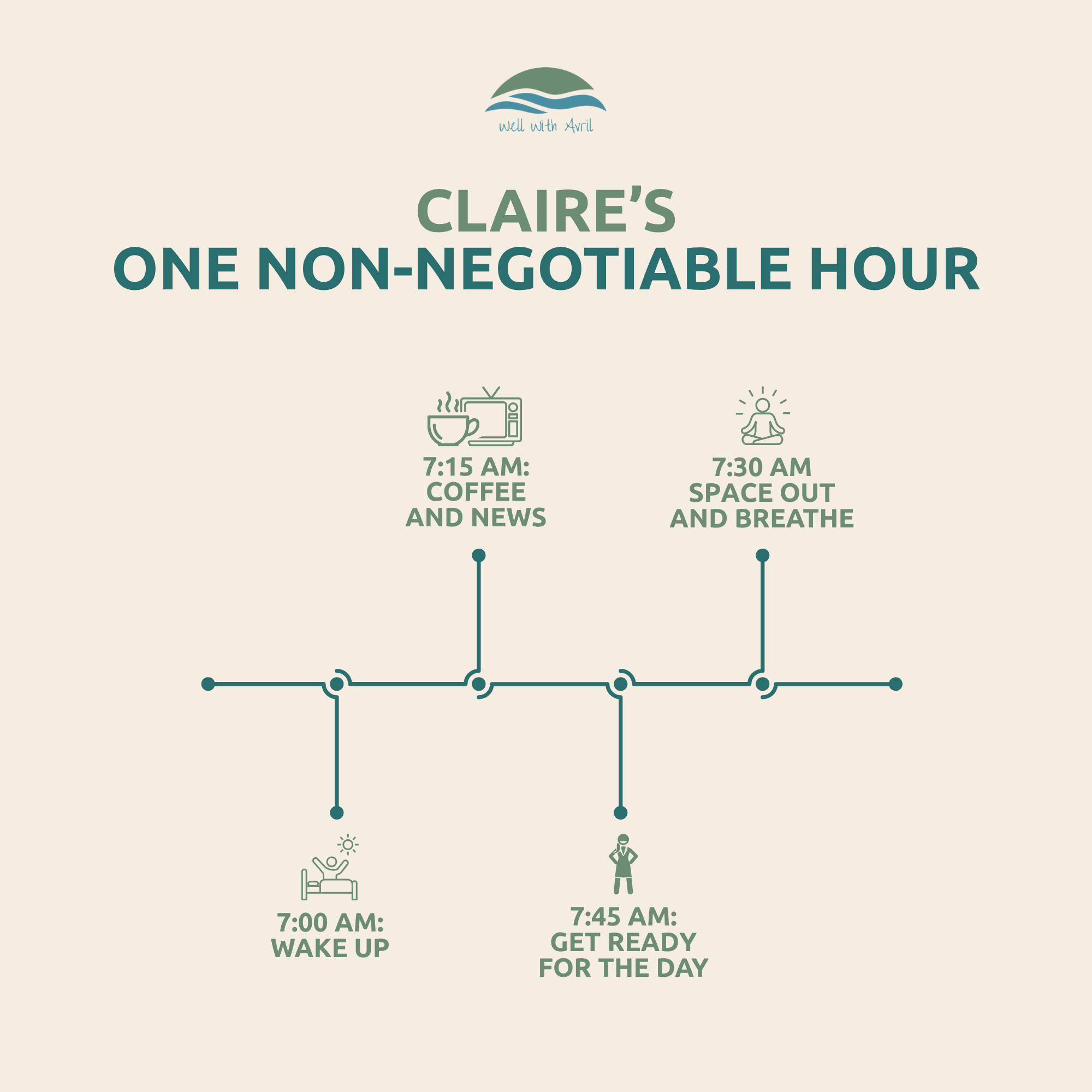
And six months after her last stress management coaching session, the phone that used to be the first thing she reaches for the moment she wakes up is now the least of her concerns in the morning. She mentions, "Even with my new work commute, an hour of slowly getting ready for the day while brewing coffee is a non-negotiable."
Claire Armstrong, Senior Operations Manager in Startup Operations
Much of Claire Armstrong’s adult life has been structured around work. Being an operations manager required her attention and eyes on everything happening across their global company. She was constantly on and didn’t have work boundaries. Work dictated her schedule and defined her sense of self.
Preparing to leave that role also meant breaking up with the routine she's been used to. She needed to explore and build a healthier routine to alleviate her cognitive overload, digital overstimulation, and identity disconnection. For Claire, that felt like a big change. “I was nervous about how to structure my day once predefined routines went away, so I needed time-sensitive, actionable advice.” Claire shared.
Before coaching, endless Slack pings and work emergencies greeted her, before she’d even had her first sip of coffee in the morning. As someone who’s coffee-motivated, that meant starting the day on the wrong track.
Without a commute at her previous job to say "I am mentally and physically clocking in", work invaded her personal life. By the time her shift ended, her brain was so exhausted from the constant notifications. It left her with no energy to socialize, much less respond to friends' and family's texts. She started to forget friends' birthdays. And, she often skipped meals to make time for another meeting.
How Trial-and-Error Through Coaching Helped a Burnt-Out Manager Build Better Habits
So, part of our game plan was to identify routines that could give her days structure without adding more to her plate. We went through a trial-and-error process to explore what worked for her. We experimented with a few that capitalized on her strengths.
The process showed what fit her life and what didn’t. When something felt more like a chore than self-care Claire would share at our next session,"This one just didn't work for me." And, we considered that finding a success.
This lowered the pressure because everything was optional. We didn't need every habit trial to be successful. We'd look at what worked for that specific routine and what made it difficult to sustainably adopt into her day-to-day.
The rest of her day needed protecting too. Two patterns had become clear. Firstly, without a commute to signal her shift into work, there was no boundary between her personal and professional life. Secondly, Claire was deeply disciplined to follow her calendar even if it meant skipping lunch.
Claire once said, "I feel like a slave to my calendar. I just do whatever it tells me to do all day." So we reframed breaks as something she wanted to do to something she couldn't skip out on by adding 15-minute code-switching breaks for mental reset as calendar blocks. This decreased work's full access to her time while committing Claire to breaks between back-to-back meetings. As a result, it added structured and scheduled breaks into her day-to-day.
It wasn't easy at first, but with enough repetition, those scheduled breaks became something she looked forward to. She used them to prepare for her meetings, events, and other important moments, so she walked in grounded and refreshed instead of straight off the last task. Much like her morning routine, it became non-negotiable. Feeling proud of her progress, Claire shares during a session, "It's not a task anymore. It's a way of life.”
Real Shifts by the Numbers
5 hours
reduced average weekly overtime
zero
late-night meetings

6 hours
reclaimed daily personal time
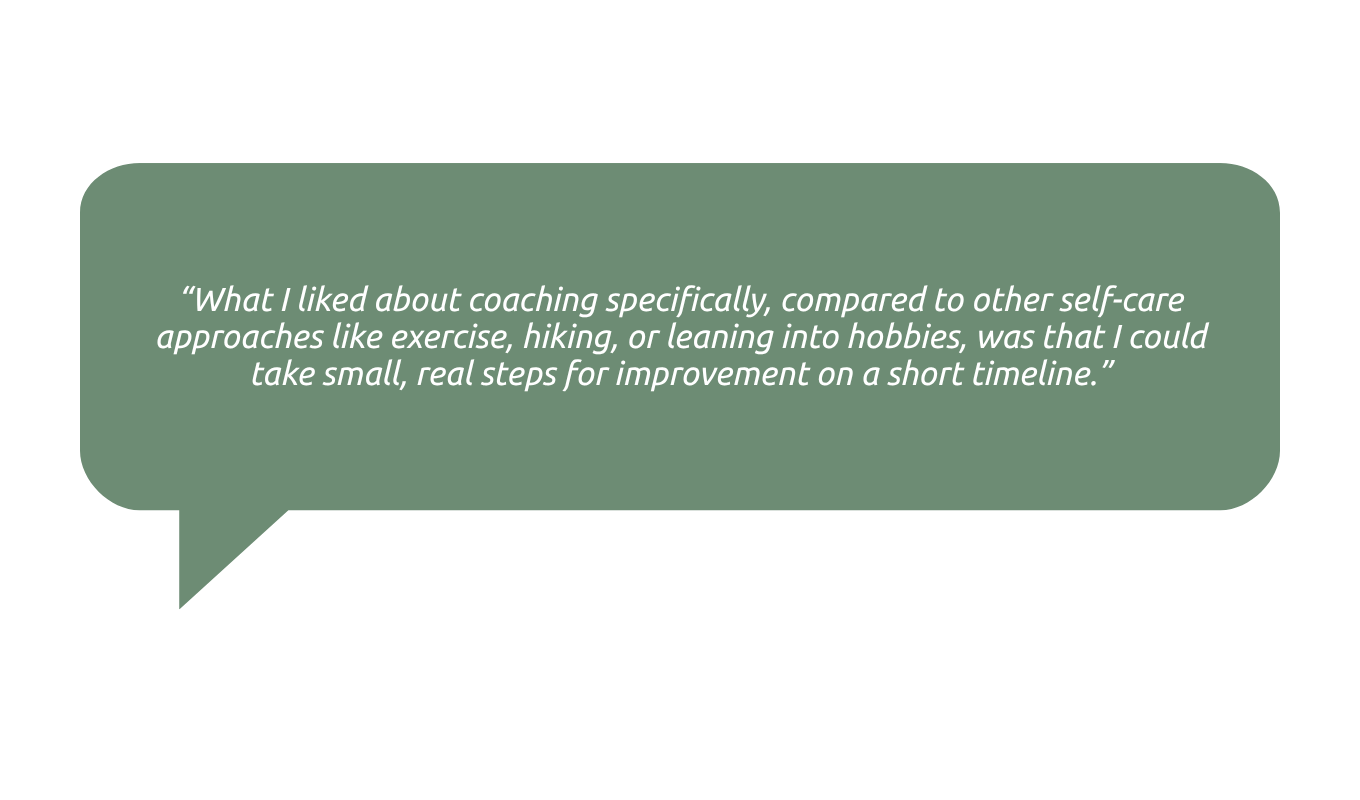
For her past self who saw coaching as another task to check off her to-do list, retrospectively, Claire wished she started stress management and lifestyle coaching sooner. She shares, "There's no need to worry 24/7. When I was overwhelmed and forgetful, I constantly worried that balls would drop, but everything always works out.”
Claire encourages anyone on the fence to try coaching as:
How Setting Work Boundaries Helped Reclaim 7 Hours for a Busy Operations Manager
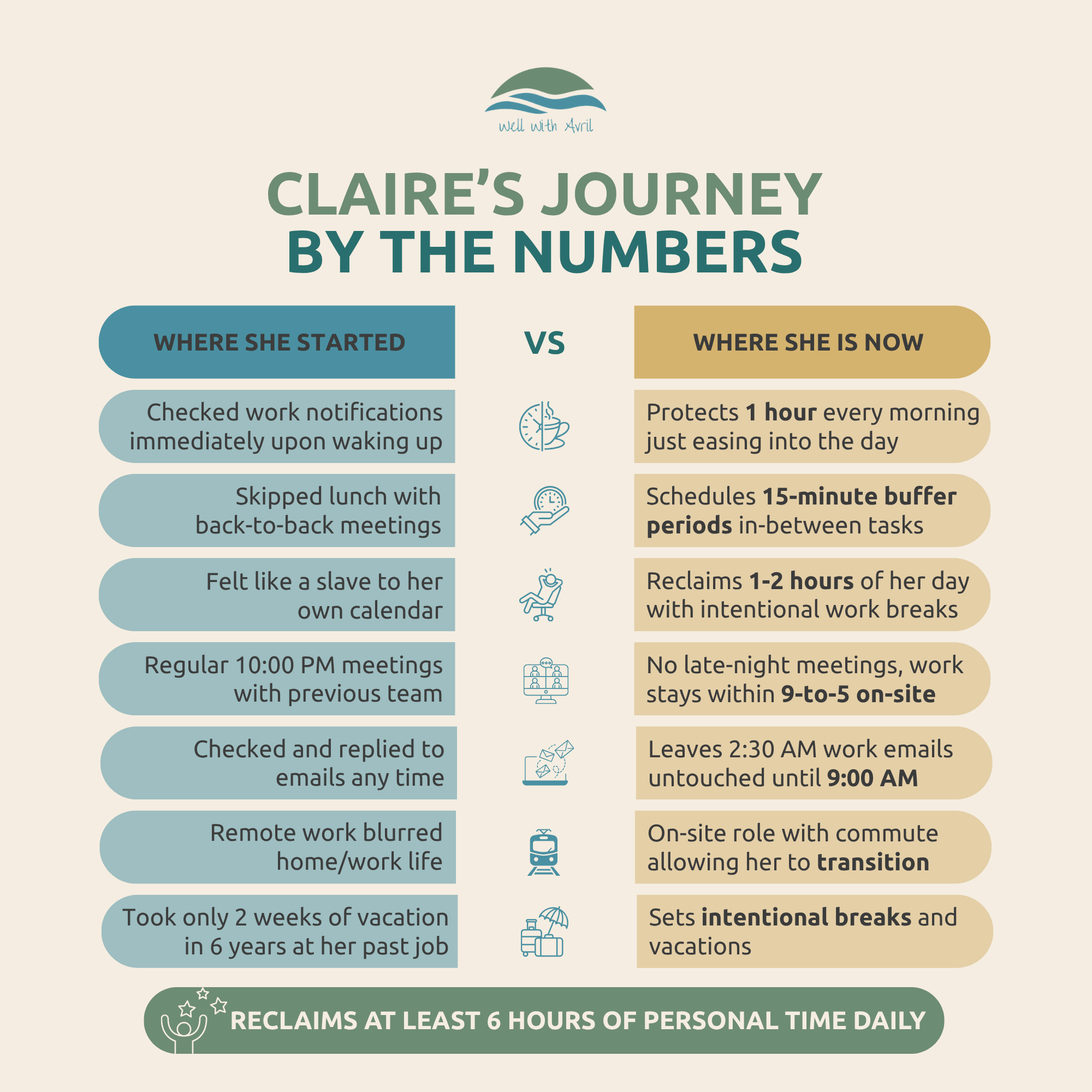
One of the experiments that stuck was protecting her mornings. At first, even the idea of not checking her phone after waking up felt like grief because it meant less time to complete her work tasks. But, she knew she needed a different way to start her day to avoid feeling drained mid-day.
At first Claire committed to dedicating 30 minutes to slowly and mentally transition into work mode. She woke up, drank her coffee, then prepared for the day. She realized it was a lot easier than anticipated. Thirty minutes became an hour, and only once that hour was up would she check her inbox for anything urgent.
That’s her non-negotiable hour.
Even during her job search, Claire was already making time for herself by going on an international trip in the middle of it. Boundary-setting carried on during negotiations for her new role. She confidently informed her new team of vacation plans for the following year whereas the previous version of herself would have never considered taking a break. This, alone, said a lot about how much she’d learned about prioritizing and honoring her personal needs through coaching.
Her team is no longer international, but late-night emails still show up now and then. An email from her boss at 2:30am doesn't pull at her anymore. She gets to it in the morning, as she’s already set her boundaries.
Claire used to instinctively reach for her phone first thing in the morning. Now, she dedicates an hour for her morning routine before touching her devices. She also considers the work train commute as additional time to simply be to look out the window and relax before the day starts. “Sometimes I pull my laptop out on the train to answer emails, but it doesn't feel like something urgent I have to do anymore.” Claire says.
She takes thirty minutes to an hour of breaks throughout her shift, which adds up to one to two hours of real time reclaimed. She no longer feels pressured to work the extra 5 hours until 10 PM. Lunches are now taken mindfully, without costing her any productivity. If anything, the breaks have made her more productive. Her vacations look different too. Claire went from taking only two weeks off across six years at her previous job to purposely and intentionally planning ahead for rest.
Reflections on the Impact of Coaching on Self-Care
If you recognize yourself in Claire's journey, you don't have to figure it out alone. Start with the Stress Pattern Self-Check. From there, we'll find where to begin and build on it together through 1:1 coaching.




Why Well With Avril
Finding balance shouldn’t require stepping away from a career you love. Before becoming a full-time wellness coach, I spent years navigating corporate deadlines, constant context-switching, and the invisible stress that comes with high performance.
That experience inspires the practical tools I teach to help other professionals find calm, clarity, and balance before work takes over everything else. Claire’s story is one example of what’s possible when you give yourself room to pause: an unhurried morning hour, breaks she looks forward to, and boundaries that hold.